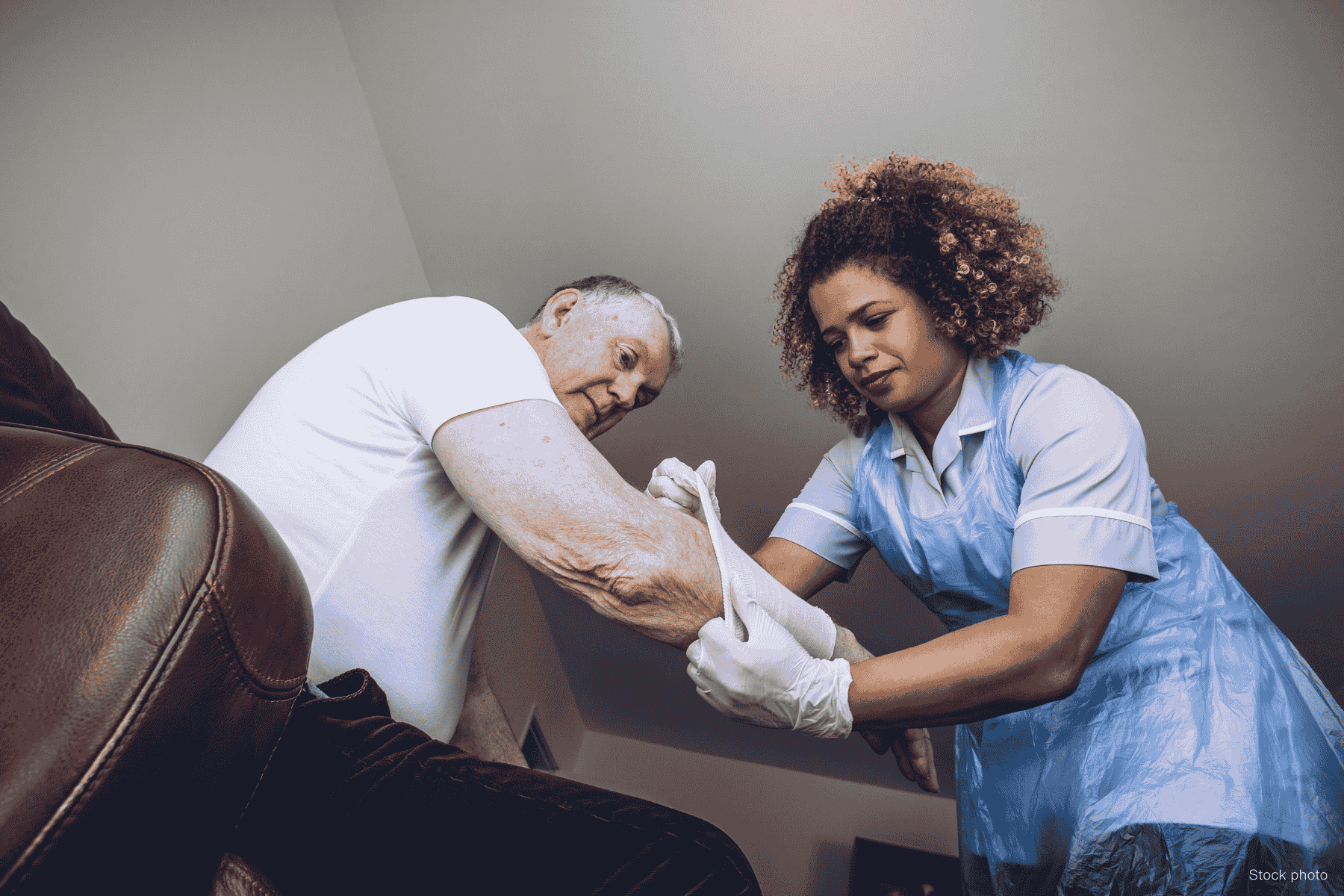
Many traditional practices relating to wounds have been found not to be based on robust scientific evidence. Despite that, “old school” practices still occur in the clinical setting. Every nurse needs to be able to question and challenge wound care practices that are no longer supported by the latest evidence, but to do so, practitioners must be well-informed and able to provide the relevant supporting evidence. The informed wound practitioner’s role is to act as an agent of change.
The principles of wound management remain the same, no matter what type of wound you are caring for. The principles to be considered are:
- assessment and risk management,
- person-centred, culturally sensitive care,
- holistic approach to wound management,
- evidence-based wound management,
- using a multidisciplinary approach to wound management.
Nurses are one of the leading health professionals in the field of wound care, and the Australian College of Nursing helps support nurses to advance their skills in the field, with a Wound Management unit of study, online and face-to-face wound CPD courses (some of which are free to members). We also manage the Chronic Wound Scholarship Program.
To mark Wound Awareness Week 2025, we are pleased to share some fundamental “dos and don’ts” of wound care (International Wound Infection Institute, 2025).
Dos of wound care
- DO Remember your 5 moments of hand hygiene!
- DO Obtain verbal consent and ensure your patient is not allergic to any cleansing or dressing products.
- DO Be gentle when removing the previous dressing. If it is stuck, soak it with saline to facilitate removal.
- DO Make sure you use a dressing that will cover the entire wound bed. You don’t want to leave any gaps that will stick to the secondary dressing or padding.
- DO Use the aseptic no touch technique (ANTT) and clean the wound with the chosen cleaning solution at body temperature from the area of least contamination to most contamination.
- DO Secure the dressing. Use a secondary dressing or padding if required. Consider where on the body the dressing is and secure it accordingly. For example, if the wound is on a foot and your patient is walking around, tape and a tubular (sock-like) bandage may work better than tape alone.
- DO Clearly document the appearance of the wound, noting classification, size, depth, colour, exudate, odour, and granulation. The use of photography with patient consent is beneficial to monitor wound progression, especially when being reviewed over time by different clinicians.
Don’ts of wound care
- DON’T Open dressing products before you have reviewed the wound. Wounds can change quickly, and what was put on the wound at the last dressing change may not be appropriate for this dressing change.
- DON’T Forget pain relief! If required, give it to your patient 30 minutes prior to the dressing change. Ensure that this is considered when you are planning your time.
- DON’T Forget the 5 moments of hand hygiene!
- DON’T forget to clean the surrounding skin and peri-wound first, prior to applying the dressing. This will prevent bacteria on the healthy skin from making its way into the wound.
- DON’T Obtain a wound swab until AFTER you have cleaned the wound. This will enable you to collect the microorganisms that are on the actual wound bed and not accumulated skin flora or contamination from old exudate from the previous dressing. Moisten the wound collecting swab with 0.9% sodium chloride. A moist wound swab will obtain a more accurate result than a dry one.
Always come back to principles
Knowing which solution and method can be confusing; however, your choice of cleansing solution and technique should reflect the results of your comprehensive wound assessment.
It is essential to use a principles-based approach, grounded in evidence, and embedded within policies, procedures, and guidelines that guide clinical wound care practices.
Author: Elizabeth Moran
ACN Nurse Educator – Higher Education
Liz Moran is a nurse educator at the Australian College of Nursing and coordinates the Graduate Certificate in Stomal Therapy Nursing. Liz also contributes to educational delivery across all ACN’s divisions.
Liz has a Master’s degree in Education (health science) obtained in 2011 from the University of Sydney. She is a member of the Australian Nurse Teachers Society and the Diagnostics and Interventional Cardiology Nurses Group. Liz undertook her nurse training in the United Kingdom where she worked in critical care areas. Liz has over 30 years of extensive clinical experience in both public and private health settings as well as remote area nursing in the Kimberly’s, WA. She has also worked in the field of research at St Vincent’s Centre for Applied Medical Research.
Currently she combines her two loves of nursing and education in the role of nurse educator with particular interests in evidence based practice, reflective practice and creating exceptional educational experiences. She believes that education is foundational in advancing nursing leadership.

Author: Melissa O’Loughlin
ACN Nurse Educator – Higher Education
Melissa has over 20 years of nursing experience, predominantly in burns nursing, operating theatres, and intensive care. She holds a Masters in Advanced Nursing Education, and has completed numerous higher education qualifications including a Graduate Diploma in Nursing Science (Burns Nursing), Graduate Certificate in Diabetes Education & Management, and has a Certificate IV in Training and Assessment.
Prior to joining the Australian College of Nursing, Melissa commenced her nursing education journey teaching undergraduate nursing students. She is passionate about creating supportive and engaging learning environments and strongly believes that ongoing nursing education is fundamental to high-quality patient care.

Reference
International Wound Infection Institute. (2025). Therapeutic wound and skin cleansing: Clinical evidence and recommendations. Wounds International. https://woundsinternational.com/wp-content/uploads/2025/03/IWII_2025_Wound-cleansing-web-2.pdf